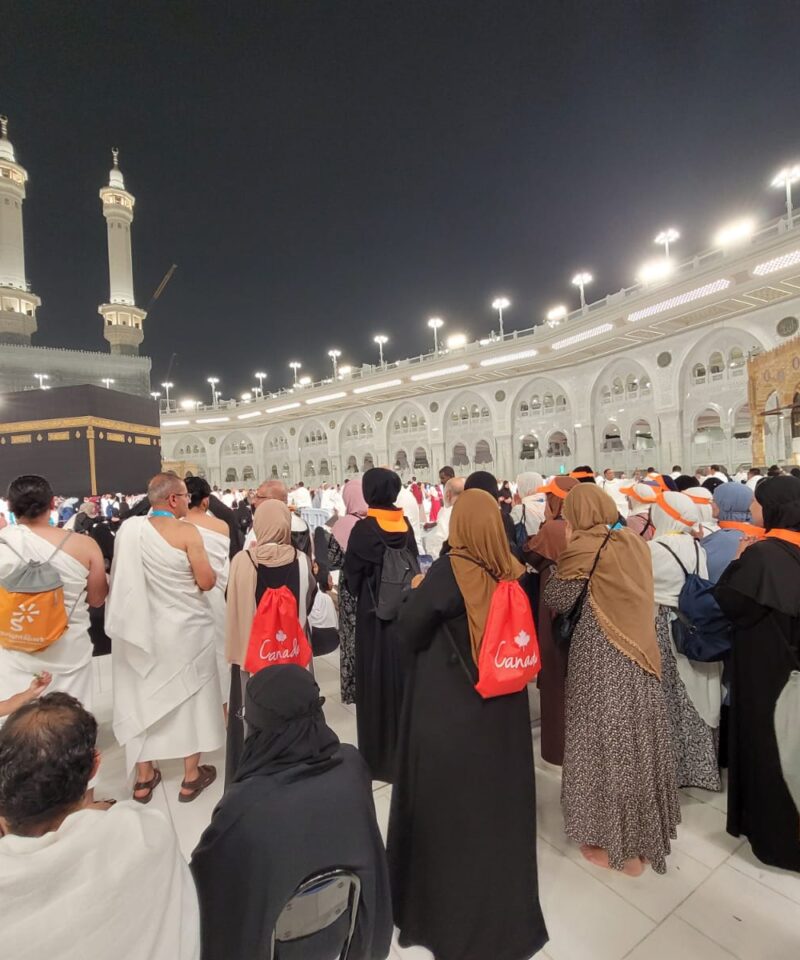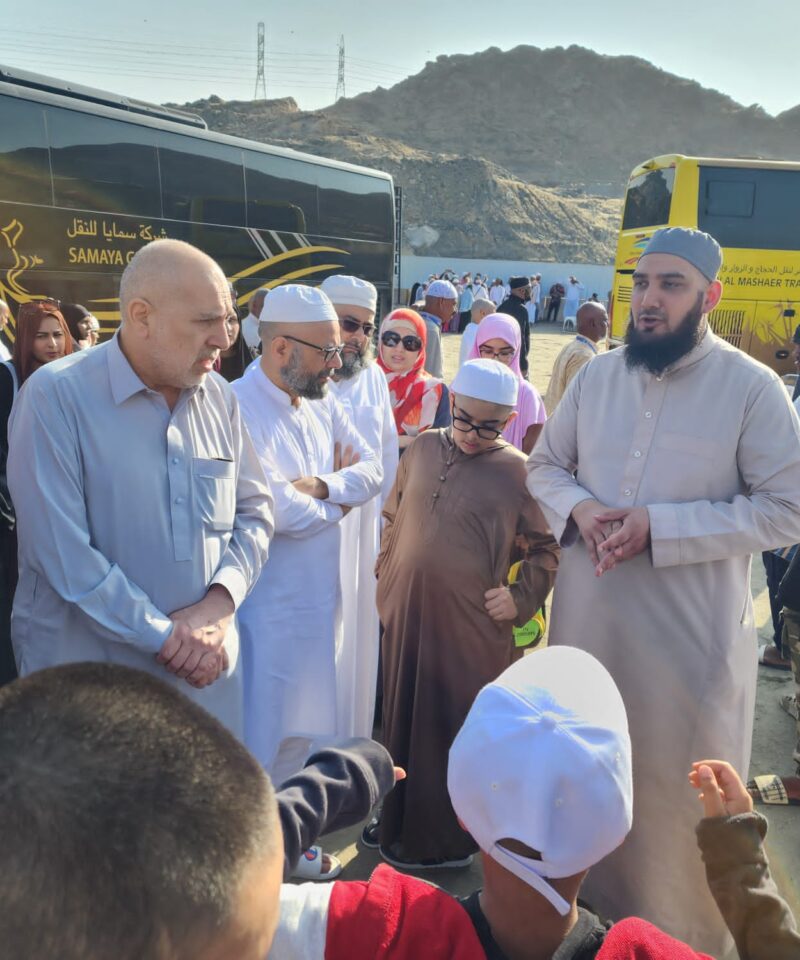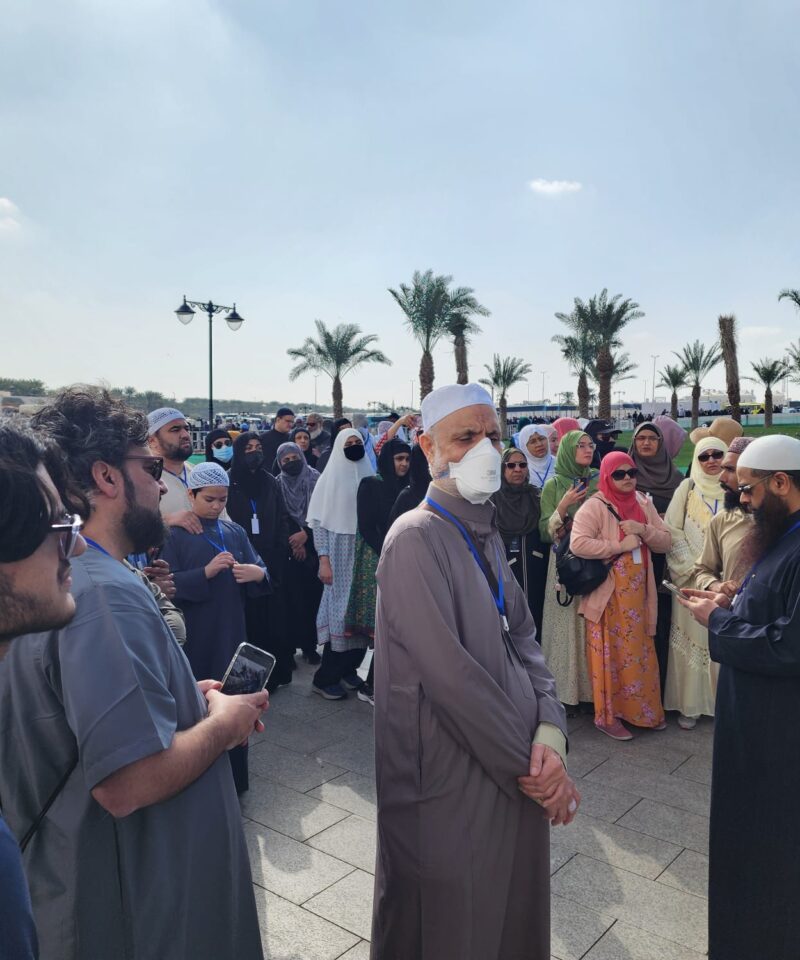
Umrah is one of the most beloved acts of worship a Muslim can undertake — a journey to the House of Allah that draws the pilgrim closer to their Creator through clearly defined rites rooted in the Sunnah of the Prophet Muhammad ﷺ. This guide walks through what Umrah is, how to prepare for it, and exactly how to perform each step correctly.
In Arabic, Umrah means “to visit a populated place.” It is often called Hajj al-Asghar, or “the minor Hajj,” and unlike Hajj, it can be performed at any time of the year — with the sole exception of the five days of Hajj itself (known as Hajj al-Akbar, the greater Hajj).
“Umrah becomes an atonement for the (minor) sins between one and the next Umrah.” — Bukhari, Muslim
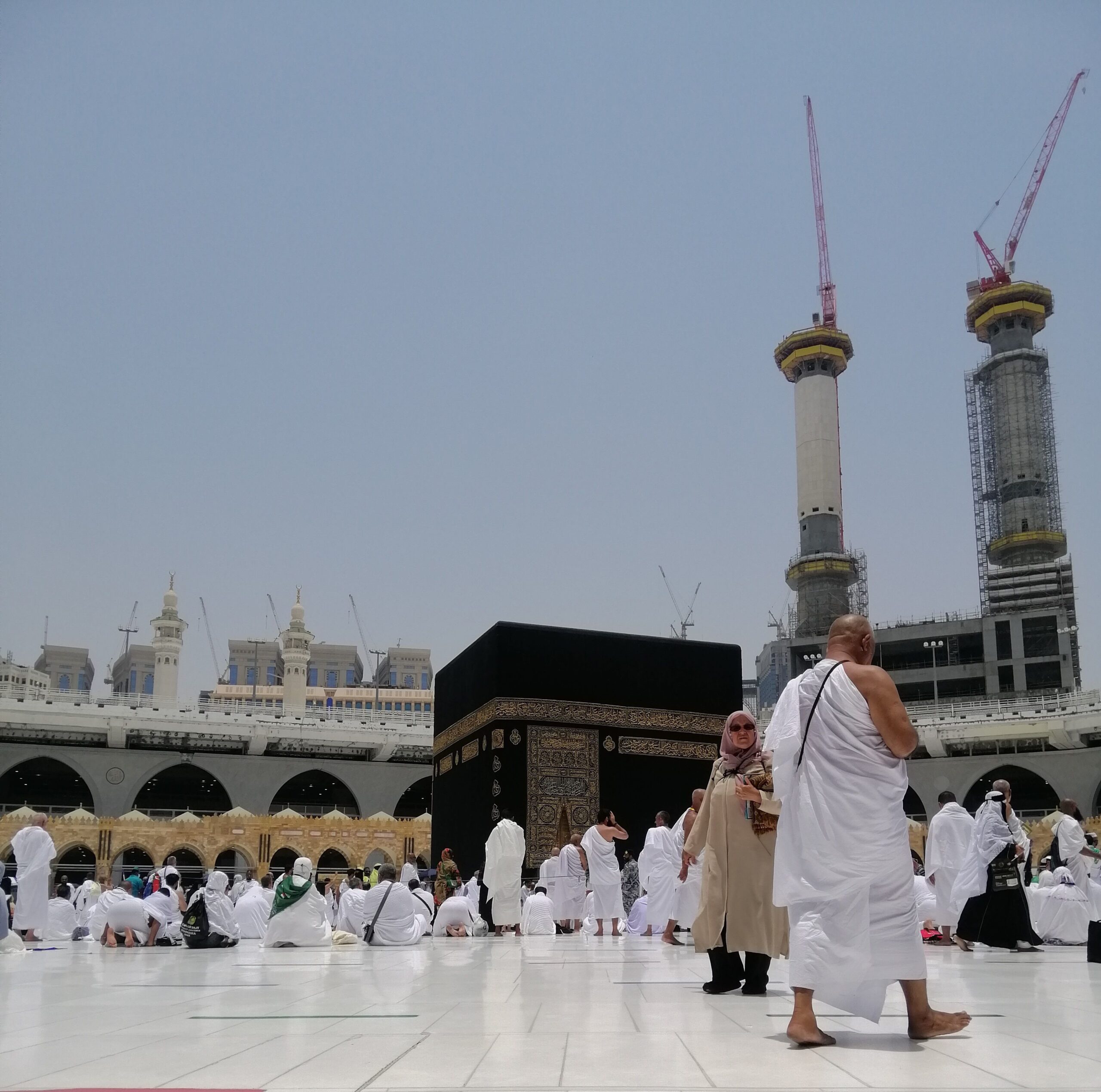
The act must be done seeking only the pleasure of Allah and the Hereafter — never to show off or gain worldly status.
The act must follow the authentic practice of the Prophet ﷺ, not personal innovation.
Ihram is a spiritual state, not just an outfit. It can be compared to fasting: just as fasting makes certain normally-permissible things temporarily off-limits once you make the intention at a specific time, Ihram makes certain things off-limits once you make the intention at a specific place. A person in this state is called a muhrim. (The garment men wear is also commonly called “ihram,” which can cause confusion — but the state itself is what matters religiously.)
Where you enter Ihram depends on where you’re traveling from:
Assuming Ihram from the correct location is an obligatory act of Umrah.
Preparation — showering, trimming nails, changing into Ihram clothing — can all be done at home or your hotel. None of this is Ihram itself. Ihram formally begins only once you make the intention and say:
“Labbayka Allāhumma ‘umrah” — “Here I am, O Allah, intending Umrah.”
If you’re worried something might prevent you from completing your Umrah (illness, unexpected obstacles), you may add a conditional clause when making your intention:
“Labbayka Allāhumma ‘umrah, wa in ḥabasanī ḥābisun fa maḥillī ḥaythu ḥabastanī.” “Here I am, O Allah, intending Umrah. If anything prevents me from completing it, my release from Ihram shall be wherever You have prevented me.”
Making this exception means that if something genuinely prevents completion, you’re released from Ihram without needing to offer a sacrifice or make up the Umrah later.
Immediately after making the intention, begin reciting the Talbiyah out loud and frequently, continuing until the moment you see the Ka’bah:
“Labbayka-llāhumma labbayk, labbayka lā sharīka laka labbayk, inna-l ḥamda wa-n ni’mata laka wa-l mulk, lā sharīka lak.”
“Here I am, O Allah, here I am. Here I am, there is no partner with You, here I am. Verily all praise is for You, and every bounty is from You, and all dominion is Yours — You have no partner.”
The Companions used to recite it individually rather than in unison after a “leader,” though it’s fine if voices coincide naturally. Women should recite it in a lower voice than men.
For Everyone: Using perfume (scented soap is fine), shaving or cutting any body hair, marital relations or proposing marriage, and hunting or killing game (insects like mosquitoes are excepted).
For Men: Wearing sewn/fitted garments (shirts, trousers) and covering the ankles, heel, or top ridge of the foot with footwear. A note on “sewn garments”: this doesn’t mean clothing with visible stitching — it means clothing tailored to fit a part of the body, like a shirt or trousers. A belt, watch, glasses, or backpack are all permitted since they aren’t considered clothing.
For Women: Wearing niqab or gloves (face may still be covered with a scarf).
Pilgrims often worry unnecessarily about small things. The following are all fine:
If a rule is broken unintentionally — through forgetfulness, being unaware, or being forced — there is no sin and no expiation required; the Umrah remains valid. Allah says: “There is no sin on you concerning that in which you made a mistake, except in regard to what your hearts deliberately intend.” (33:5)
If a prohibited action is done deliberately for a valid reason, expiation (fidyah) is due: fasting three days, feeding six poor people, or sacrificing a sheep.
It’s a Sunnah to take a bath (ghusl) before entering Makkah if possible. Upon reaching the mosque, enter with your right foot and say:
“Allāhumma ṣalli ‘alā Muḥammadin wa sallim, Allāhumma iftaḥ lī abwāba raḥmatik.” “O Allah, send prayers and peace upon Muhammad, O Allah open the doors of Your mercy for me.”
There’s no specific dua required upon first seeing the Ka’bah — you may raise your hands and supplicate freely. It’s also a common misconception that you must enter through a particular gate; any gate is permissible.
Two Sunnahs that apply to men only:
What to say during tawaf: There’s no fixed dhikr for the whole tawaf — recite Qur’an, say Subhan Allah, Alhamdulillah, or make personal dua as you walk. The one exception is between the Yamani Corner and the Black Stone, where it’s Sunnah to recite:
“Rabbanā ātinā fi-d dunyā ḥasanatan wa fi-l ākhirati ḥasanatan wa qinā ‘adhāba-n nār.” “Our Lord, give us good in this life and good in the Hereafter, and save us from the punishment of the Fire.”
After completing seven rounds, move toward Maqam Ibrahim and pray two rak’ahs there (or anywhere with space, if it’s crowded). It’s recommended to recite Surat al-Kafirun in the first rak’ah and Surat al-Ikhlas in the second.
After the two rak’ahs, go to a Zamzam station, drink from it, and pour a little over your head — as narrated from the Prophet ﷺ. Zamzam water, he said, “is for whatever purpose it is drunk for,” and “satisfies as food and cures illness.” Afterward, return to the Black Stone and touch or gesture toward it again if possible.
Wudu is not required for sa’y. Start at Safa, reciting:
“Inna-ṣ Ṣafā wa-l Marwata min sha’āiri-l llāhi.” (“Safa and Marwah are among the symbols of Allah” — 2:158)
Followed by: “Nabda’u bimā bada’a Allāhu bihī” (“We begin with what Allah began with”)
Face the Ka’bah and recite the takbir and declaration of tawhid three times, making dua in between each repetition. Then walk toward Marwah — men jog briefly through the marked (green-lit) middle section — repeating the same dhikr and dua upon reaching Marwah. This is one lap. Complete seven laps total, finishing at Marwah.
The final step is trimming or shaving the hair:
Once this is done, everything that was restricted during Ihram becomes permissible again, and your Umrah is complete.
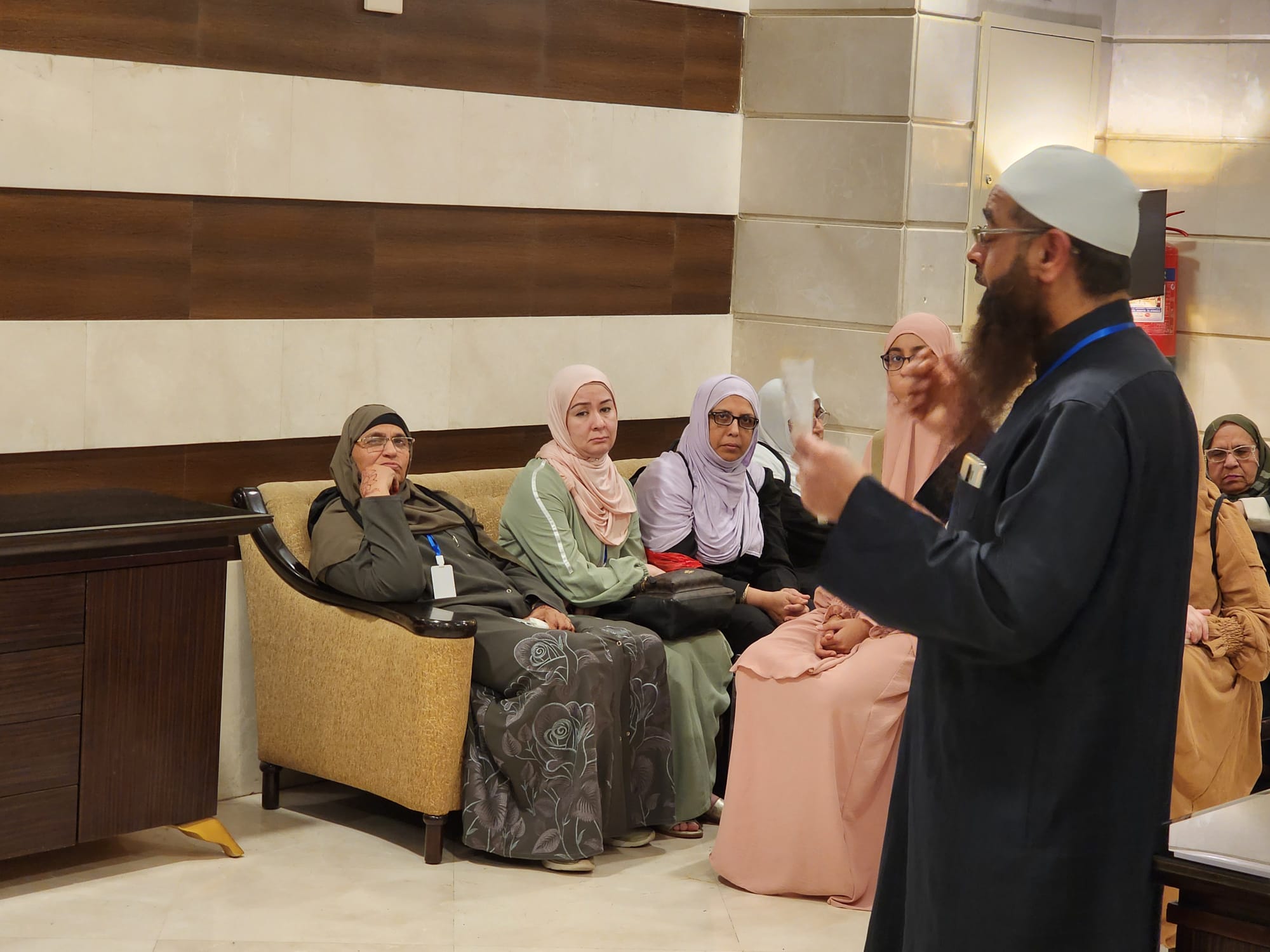
Umrah is a physical journey, but its real purpose is a spiritual one. As the seminar tradition reminds us: use every moment in Makkah and Madinah wisely, since reward there is multiplied and time is precious. May Allah accept the effort. Ameen.